





Kick a Lucky Block
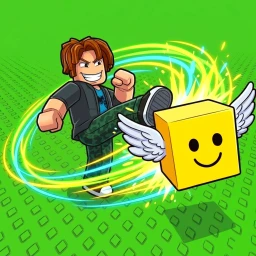
Kick a Lucky Block is a free browser-based arcade game where one block, one kick, and one random roll decide your whole run. Published in 2026 as an HTML5 project, Kick a Lucky Block loads in any modern browser with no installation and no account creation — accept the auto-generated username, click the block, and the chaos starts on the next roll. The game sits in the same casual arcade niche as titles like Bloxd io, but the kick-a-lucky-block hook is narrower and easier to grasp in a single session, which is why Kick a Lucky Block has spread fast across short-form video and browser portals in 2026.
The hook is brutally simple: every kick is a gamble. Sometimes the lucky block drops Brainrot rewards, sometimes it spawns a tsunami, and most of the time the difference between a winning run and a wiped base is one timing window. If you came here searching for kick a lucky block codes, hunting a kick a lucky block wiki entry, or just wanting a clean walkthrough of how the game actually works, the answer is the same official site and the same set of mechanics — covered below from first-session tips to late-game upgrades.
That's the short version. The full breakdown follows.
How to Play Kick a Lucky Block
Open the game at kickblock.io, accept the auto-generated username, and click the block on the first screen. There is no tutorial and no prologue — Kick a Lucky Block drops you straight into the action, and the controls are intentionally minimal so the kick rhythm is the only thing you have to learn.
Movement is just the Arrow Keys, with a single action key to deliver the kick. Each kick costs nothing and you can keep mashing forever, but the cooldown forces a short rhythm — chain kicks too fast and you trigger wasted rolls, wait too long and the hazard meter builds up.
First 10 Minutes
The opening session of Kick a Lucky Block is mostly calibration. Expect three to five wasted rolls before the timing clicks, then a steady stream of Brainrot rewards as the game warms up. Save the first batch of rewards for plot placement rather than impulse upgrades. Plot income in Kick a Lucky Block accelerates much faster than a single upgrade tier at the start, and spending on impulse upgrades in minute two is the most common new-player mistake.
Kick a Lucky Block Codes, Rewards, and the "Code" Question
This is the search term that brings most people to a guide like this, so it deserves a direct answer. Kick a Lucky Block does not publish a traditional code redemption system. No string you paste in, no menu where redeemable codes live. What the game calls "codes" in community shorthand is the time-limited reward chains that drop during active events.
What a "Code" Actually Means in This Game
When players talk about a kick a lucky block code, they usually mean one of three things. First, the chained reward drops that appear during limited-time event hours — these are the closest functional equivalent to codes. Second, the rare-tier Brainrots that show up roughly once per several hundred kicks and behave like a jackpot pull. Third, the hidden pattern unlocks that experienced players have mapped out, where specific kick angles or timing windows produce above-average reward rates.
Brainrot Reward Tiers
Each roll produces one of several Brainrot reward tiers. Common tiers fill the plot fast and are the bread and butter of progression. Rare tiers unlock weight upgrades and character training paths. The rarest tier triggers environmental changes that affect everyone on the server — visual shifts, music changes, server-wide bonuses — and is what every long-session player is chasing.
Event Chains: Where Most "Codes" Live
Code in kick a lucky block is best understood as the chained event rewards. During an active event window, consecutive kicks produce themed rewards at higher rates than baseline, and the rewards rotate based on the event theme. Timing your long sessions around the event calendar is the most reliable way to catch the high-tier rewards without grinding baseline rolls.
Survival Mechanics and Hazards
Survival is the second half of the title, and it is what turns the game from a casual clicking toy into a tense timing puzzle. Each kick can spawn a hazard on top of whatever reward it drops, and ignoring the survival layer caps your run length hard.
The Tsunami
The flagship hazard is the tsunami. Without warning, a wave rolls across the playing field and only the elevated tiles survive. Players who get caught off-guard lose their unplaced Brainrot plus any in-progress upgrade progress. Players who read the visual cue keep their rewards and pick up a bonus score multiplier. The warning lasts about two seconds, which is plenty of time once you've seen it three times.
Lightning and Shifting Platforms
Two secondary hazards round out the survival layer. Lightning strikes target the highest-value reward currently on the field, so a screen full of common-tier drops is safer than a screen with one rare drop sitting out in the open. Shifting platforms rearrange the safe zones mid-kick, which forces players to learn the elevated tile layout rather than memorize a single safe path.
Survival Rules That Actually Work
Three habits separate long-run survivors from wipe-on-tsunami-three players. Keep the plot stocked before any hazard window — Brainrot on the field is Brainrot at risk. Save upgrades for after hazard windows close, because dying mid-upgrade loses both the currency and the progress bar. And learn the visual cue for tsunamis on day one; the warning is short but it is consistent, and players who internalize it within their first ten minutes are the ones who clear long sessions. The longer you survive, the more the meta reveals itself, because high-tier Brainrot only drops in sessions that last past the three-tsunami mark, and the score multiplier for surviving five consecutive tsunamis is the single biggest income boost in the game outside of event chains. New players who treat the tsunami as a loss condition stay stuck at common-tier rewards; experienced players treat it as a recurring score opportunity, and the difference between those two mindsets is roughly an entire tier of reward quality per session, which compounds across a weekend of play into a meaningful progression gap.
Upgrades and Progression
Progression is built around three loops that feed each other. Skip any one of them and you cap your long-term rewards.
Weights and Character Training
Earned Brainrot can be spent on weight upgrades that increase the range and effectiveness of each kick. Heavier kicks produce higher-tier reward rolls, so the math favors waiting until you can afford the next weight tier rather than spending on cosmetic upgrades early. Character training works the same way — each tier increases kick speed and reduces cooldown, and both compound the reward rate over time.
Plot Income and Why It Matters
Placed Brainrot generates passive income that compounds over time. The optimal progression path is to keep at least one plot slot full at all times, reinvest that income into weights and training, and only then think about cosmetic goals. Players who follow this loop outpace click-spamming early players by the end of a single long session — the gap is visible in the scoreboard within an hour.
The Kick a Lucky Block Wiki Situation
There is no official wiki for kick a lucky block. The community has filled the gap with detailed tier lists, hazard timing guides, and progression calculators, and those community-maintained resources are the most reliable source for the current meta because the game updates monthly and tier ordering shifts between patches.
External guides worth bookmarking include topgames.gg, kickaluckyblockscripts.com, and community-maintained wikis at sites like kickaluckyblock.wiki. All three publish fresh kick a lucky block guides each patch and stay current on the latest reward tier changes.
Tips and Tricks
A few details that take too long to figure out solo. The arrow-key direction matters for kick timing — kicking from a specific angle produces different reward weights, and switching angles between kicks is the most reliable way to land rare tiers without burning out on a single direction. The cooldown is shorter than it looks; players who wait for the visual reset kick roughly twice as fast as players who wait for a fixed timer.
The plot system is the most underrated progression path. Spend the first ten minutes placing every common-tier drop, and the income compounds well past the point where weight upgrades would have paid off in the same time window. And if a tsunami window is approaching, hop to the highest safe tile rather than trying to dodge it on the same level — the elevated tiles survive every wave, and the score multiplier for staying alive through the wave is worth more than any dodge-and-pray strategy.
One last thing. The kick angle that produces the highest-tier rewards rotates between patches, so the angle that worked last month may not be the meta this month. Check the community tier list before committing your weight upgrade path — the gap between following the current meta and playing last month's meta is about a tier and a half of reward quality per session. That is the whole game, in plain terms.
Frequently Asked Questions
Is Kick a Lucky Block free to play? Yes — completely free, runs in any modern browser without downloads or subscriptions. The game is funded through optional ads that appear between sessions rather than through pay-to-win mechanics, and every upgrade in the game is available without spending real money.
Do I need to download anything? No installation is needed. The full game loads from the browser tab at kickblock.io, and it works on desktop, tablet, and mobile browsers alike. If a site ever asks you to download a launcher or an .exe to play, that is a scam and should be closed immediately.
Are there any actual kick a lucky block codes I can redeem? The game does not currently publish a traditional code redemption system. The closest equivalent is the time-limited event drops that appear as chained rewards during active events — these function like codes in practice but require active play rather than a redemption string.
What is the rarest reward? The rarest drops are the environmental Brainrots that trigger server-wide visual changes. They appear roughly once per several hundred kicks and are the strongest currency in the game. Most players will see one within a long session, but new players chasing them often upgrade their kick weights first to speed up the rate.
Can I play with friends? Yes — the game includes a multiplayer mode where players share the same playing field and contribute to the same hazard windows. Multiplayer sessions reward cooperative placement strategies, since shared plots generate more income than individual plots at the same tier.
Is Kick a Lucky Block safe for kids? The game is rated suitable for general audiences and contains no graphic content. The chat system is unmoderated, so parental guidance is recommended for younger players — most online safety tools and built-in browser mute functions work the same way as in other browser games.
Where can I find the kick a lucky block wiki? There is no official wiki, but community-maintained guides cover tier lists, hazard timing, and progression paths in detail. Sites like kickaluckyblock.wiki and kickaluckyblockscripts.com publish updated guides each patch and are the best starting point for players who want to plan around the current meta.
Conclusion
Kick a Lucky Block earns its place in our 2026 browser-game roundup by keeping the core loop simple and the hazard layer sharp. Five minutes or five hours both work — the kick rhythm is easy to learn, the upgrade tree rewards patience, and the multiplayer mode gives the progression a social hook. If you came for kick a lucky block codes, found this guide instead, and are still reading — give the game a few rolls at kickblock.io. The meta clicks faster than you would expect, and the survival layer is sharper than it looks from the outside.